
Carbon. The future.
The autoclave is equipment utilized in the manufacturing industry for producing composite artifacts made of carbon fiber and glass.
Carbon fiber is a composite material composed of carbon fibers reinforced by a polymeric matrix. Carbon fibers are lightweight and strong, finding applications in various industries such as aerospace, automotive, and sports.
Fase 1
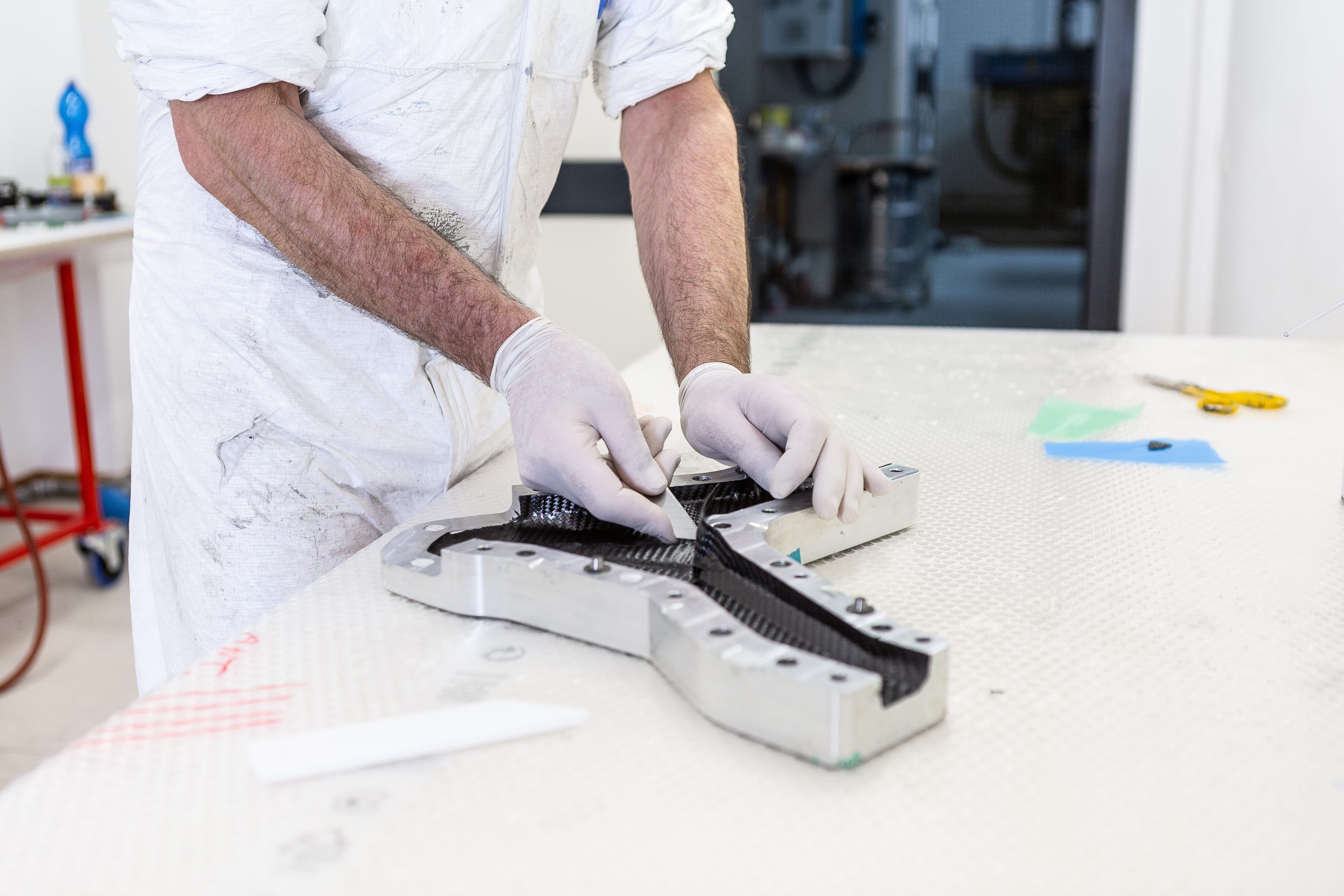
Manual lamination is a technique that necessitates meticulous design of the artifact. This is because the process involves the manual placement of layers of carbon fibers or other composite materials inside a mold.

Fase 2
The autoclave allows for optimizing the mechanical properties of the artifact through the correct combination of temperatures, pressures, and vacuums.
Fase 3.
During the post-curing phase, the artifact undergoes a final hardening process inside the autoclave. This process ensures complete resin polymerization, allowing the artifact to achieve maximum mechanical strength. Temperature and curing duration are carefully controlled within the autoclave to ensure optimal results.


Fase 4.
In conclusion, the autoclave plays a fundamental role in the manual lamination process and the production of high-strength composite artifacts. Its proper use allows for achieving high-quality results due to meticulous design of the artifact and its mold, the use of high-quality raw materials, and a controlled post-curing phase.